Alfa Romeo 8C 2300: The Car That Won Le Mans Four Years Running
Vittorio Jano's supercharged straight-eight won Le Mans four times in a row. The engine, the drivers, the chewing gum fix and what came next.
Table of Contents
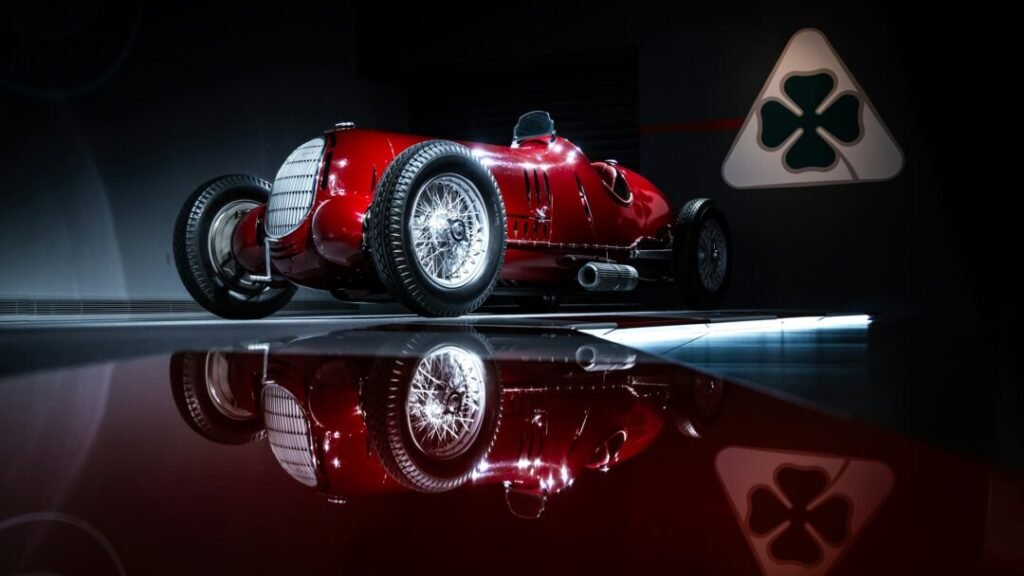
The Alfa Romeo 8C 2300 is the supercharged straight-eight that Vittorio Jano designed for 1931, and it won the Le Mans 24 Hours four years in a row, from 1931 to 1934. Only 188 were built, nine of them in Le Mans trim, yet the car also took the Targa Florio, the Italian Grand Prix and two Mille Miglia.
- Designer: Vittorio Jano, head of Alfa Romeo’s planning department; the car first raced at the 1931 Mille Miglia
- Engine: 2,336 cc supercharged straight-eight, built as two four-cylinder alloy blocks on one crankcase
- Le Mans: outright wins in 1931, 1932, 1933 and 1934, the first ever for an Italian make
- Production: 188 cars between 1931 and 1934, of which nine were the Le Mans version
What is the Alfa Romeo 8C 2300?
The name tells you most of the story. 8C stands for eight cylinders, and 2300 for the displacement, rounded up from 2,336 cc. Jano had already given Alfa Romeo a winner with the six-cylinder 6C 1750, and for the new car he kept its 65 mm bore and 88 mm stroke but doubled the idea: two cast alloy four-cylinder blocks sat in line on a common crankcase.
Between the two halves of the engine ran a central tower of gears. It drove the twin overhead camshafts, the supercharger and the ancillaries. Alfa Romeo’s Heritage HUB archive lists a lobe type compressor, light alloy heads and two valves per cylinder. The most powerful road racing version, the Spider Corsa, made 155 hp at 5,200 rpm.
Customers bought the 8C 2300 as a rolling chassis, in short (Corto) or long (Lungo) wheelbase form, and sent it to a coachbuilder. Zagato, Touring, Castagna, Pinin Farina and Brianza all clothed them, which is why the surviving cars wear such different bodies. Production figures from Wikipedia’s 8C history give 24 cars in 1931, 68 in 1932, 89 in 1933 and just 7 in 1934.
How many times did Alfa Romeo win Le Mans?
Four times outright, all with the 8C 2300, and all in a row. No other Alfa Romeo has won the 24 Hours overall. The Le Mans version was a long wheelbase four-seater with a Touring Superleggera body, weighing about 1,000 kg.
| Year | Winning drivers | Entrant | Key fact |
|---|---|---|---|
| 1931 | Earl Howe, Tim Birkin | Earl Howe (private) | 184 laps, 3,017.65 km at 125.74 km/h, seven laps clear |
| 1932 | Raymond Sommer, Luigi Chinetti | Raymond Sommer (private) | Alfa one-two, two laps ahead of the works car of Cortese and Guidotti |
| 1933 | Raymond Sommer, Tazio Nuvolari | Raymond Sommer (private) | Won by about 10 seconds after 24 hours |
| 1934 | Luigi Chinetti, Philippe Étancelin | Luigi Chinetti (private) | 213 laps, won by 180 km |
1931: Italy’s first Le Mans win
The first win came from two British aristocrats. Earl Howe entered his own 8C 2300 and shared it with Sir Henry “Tim” Birkin, and they finished 184 laps, seven more than the Mercedes-Benz SSK in second. It was a grim race, with a fatal accident on the Mulsanne Straight and only six cars classified, but the result made history: as the official Le Mans organisers note, Alfa Romeo became the first Italian manufacturer to win the race.
1932 and 1933: Sommer, Chinetti and Nuvolari
In 1932 the circuit was shortened to 13.491 km, and the Alfas finished first and second. The winner was a private car entered by Raymond Sommer, who drove more than twenty of the 24 hours himself with a broken exhaust filling the cockpit with fumes. His co-driver Luigi Chinetti had fallen ill.
The 1933 race is the one Alfisti still retell. Sommer teamed up with Tazio Nuvolari, and their car developed a cracked, leaking fuel tank that the mechanics plugged with chewing gum. The extra stops let Chinetti’s sister car close right up, and the two Alfas fought to the flag. Nuvolari won by roughly 400 metres, about ten seconds, and the first two cars became the first to average more than 130 km/h at Le Mans.
1934: the fourth in a row
By 1934 the 8C 2300 was an old design, but Chinetti and Philippe Étancelin still won by 13 laps, or 180 km, the biggest margin of the decade. Their tank leaked too, and they sealed it the same way Sommer had a year earlier. By then the Le Mans car had grown to 180 hp and 215 km/h, according to Alfa Romeo’s heritage archive.
Why did privateers win Le Mans for Alfa Romeo?
Because the cars were good enough to win without the factory. All four winning cars were private entries, even in 1931 and 1932 when Alfa Romeo also ran works cars, and by 1933 the works team had withdrawn altogether. After Alfa Romeo closed its works racing team, Enzo Ferrari’s Scuderia Ferrari became its semi-official racing department from 1933, running enlarged 2.6 litre 8C Monza cars in Grand Prix events. In sports car racing the Scuderia raced only in Italy, so it did not go to Le Mans in 1934.
That is part of what makes the record special. The 8C 2300 was robust enough that gentlemen drivers could buy one, enter it themselves and beat everyone. It is a very different story from the factory efforts that brought Alfa its later titles, such as the Tipo 158 Alfetta that won the first Formula 1 world championship in 1950.
What else did the 8C 2300 win?
Le Mans was only part of the record. In 1931 Nuvolari won the Targa Florio, and Giuseppe Campari and Nuvolari won the Italian Grand Prix at Monza. Alfa Romeo liked to name cars after their victories, so the shortened two-seater Grand Prix version became the 8C 2300 Monza. The 8C 2300 also won the Mille Miglia in 1932 and 1933. Alfa’s habit of racing under symbols goes back further still, as told in the story of the Quadrifoglio badge.
8C 2300 vs 8C 2900: what came next?
The 8C 2300 was followed by the 8C 2900, first built in 1935. Its engine grew to 2,905 cc with a 68 mm bore and 100 mm stroke, and it gained two Roots-type superchargers. The 8C 2900A racing car made 220 bhp and only ten were built. It and the later 8C 2900B kept the winning going, with Mille Miglia victories in 1936, 1937 and 1938 and the Spa 24 Hours in 1936.
| 8C 2300 | 8C 2900A | |
|---|---|---|
| Years | 1931 to 1934 | 1935 to 1936 |
| Displacement | 2,336 cc | 2,905 cc |
| Bore x stroke | 65 x 88 mm | 68 x 100 mm |
| Superchargers | One | Two, Roots-type |
| Power | 155 hp (Spider Corsa), 180 hp (1934 Le Mans car) | 220 bhp |
| Built | 188 | 10 |
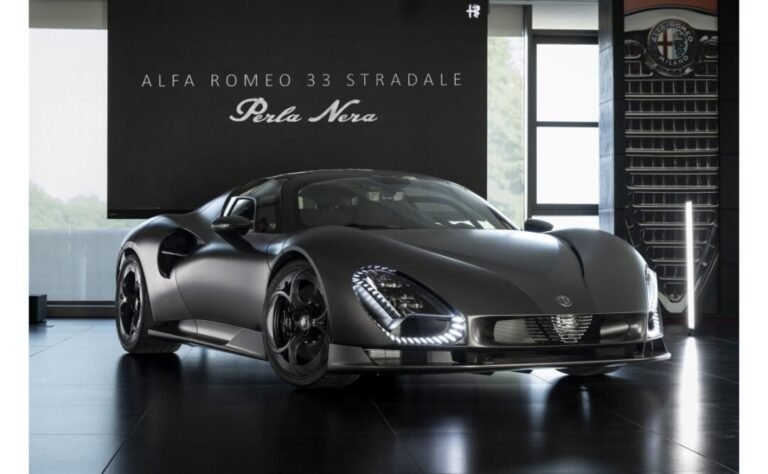
The 8C name then went quiet for decades, until Alfa Romeo revived it for the 8C Competizione of 2007. That car borrowed the badge, not the engineering, but it shows how much weight the two characters still carry. The same instinct produced the modern 33 Stradale, another name taken from Alfa’s racing past.
Frequently asked questions
What does 8C mean on an Alfa Romeo?
8C means eight cylinders, originally a straight-eight engine. The number after it gives the displacement, so the 8C 2300 has a 2.3 litre engine and the 8C 2900 a 2.9 litre one.
How many Alfa Romeo 8C 2300 were made?
188 were built between 1931 and 1934, counting both wheelbase lengths. Alfa Romeo’s heritage archive says nine of them were the Le Mans version.
Who designed the Alfa Romeo 8C 2300?
Vittorio Jano, the engineer who also created the six-cylinder 6C 1750. The 8C 2300 reused the 6C’s bore and stroke in an eight-cylinder layout.
Is the 8C 2300 related to the 8C Competizione?
Only by name. The 8C Competizione of 2007 is a modern sports coupe that revived the 8C label as a tribute to the 1930s cars. It shares no parts with the 8C 2300.
Four straight Le Mans wins, all of them for private entrants, from a car built in fewer than 200 examples: that is the 8C 2300’s legacy. When people say racing is in Alfa Romeo’s blood, this is the car they mean, and it is worth knowing by name.
If the 1930s are your Alfa era, our Alfa Romeo wall art and Alfa Romeo t-shirts bring a little of that racing history home.
More to read