Alfa Romeo Montreal: History, V8 Specs and What One Costs Today
The V8 coupe born from a Gandini show car at Expo 67: its history, full specs, known faults and what one is worth today.
Table of Contents
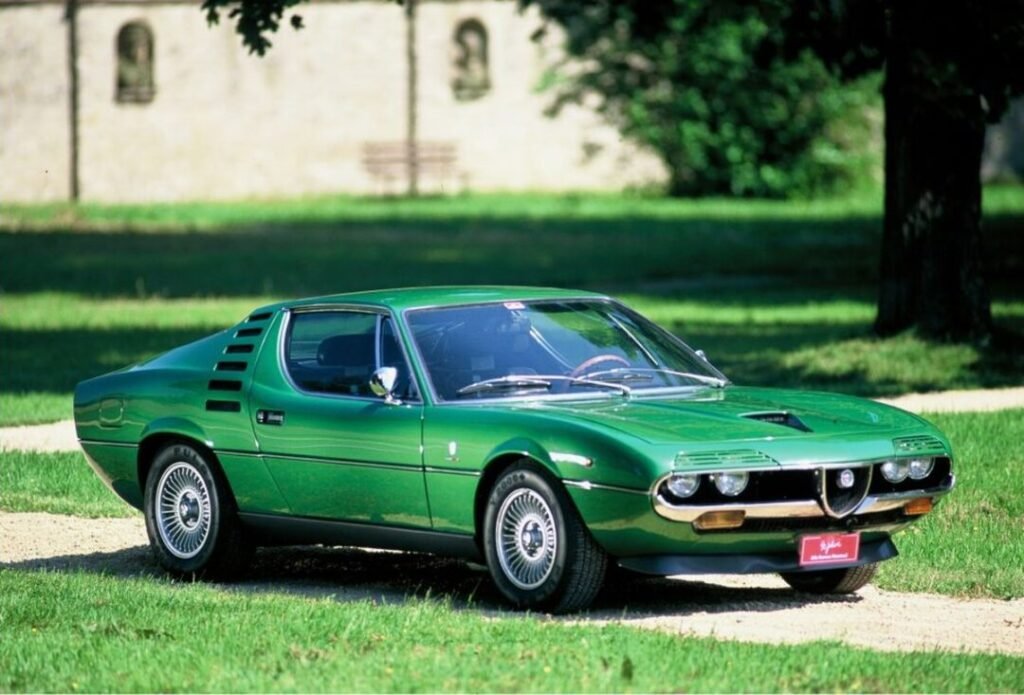
The Alfa Romeo Montreal is a 2+2 V8 coupe built from 1970 to 1977, born from a Bertone show car designed by Marcello Gandini for Expo 67 in Montreal. Its 2.6 litre V8, derived from the Tipo 33 racing engine, made 200 hp. Just 3,925 were built, and an average car now sells for about £51,000.
- Built: 1970 to 1977, with 3,925 cars according to the Alfa Romeo Museum
- Designer: Marcello Gandini at Bertone
- Engine: 2,593 cc dry-sump V8 with SPICA mechanical injection, 200 hp
- Performance: 220 km/h top speed, 0 to 100 km/h in 7.6 seconds
- Market: a median of £51,000 for an average car (The Classic Valuer, November 2026)
Why is it called the Alfa Romeo Montreal?
Because it was the star of Alfa Romeo’s stand at the 1967 Universal Exposition in Montreal. The company was asked to show a car representing the “highest aspiration of modern man in terms of cars”, and the prototype had no official name. Visitors started calling it the Montreal, and the nickname stuck when production was approved. The full story is told on Alfa Romeo’s heritage site, and it fits neatly into the wider timeline of 115 years of Alfa Romeo.
Alfa had only nine months. It turned to Bertone, whose young stylist Marcello Gandini was 29, and used the Giulia Sprint GT as a base. Two identical pearl white prototypes were built, with a 1.6 litre four-cylinder making 90 hp hidden under a body that looked as if the engine sat behind the seats. They stood in the Man the Producer pavilion between mirrors that multiplied them into an endless row, and both survive in the Alfa Romeo Museum collection.
How did a show car become a V8 coupe?
Interest at the Expo was strong enough for management to approve a production version. Gandini reworked the design: the bonnet rose to clear a new engine, the car sat slightly higher and the famous louvred eyelids stayed, now folding away when the headlights switch on. The slots on the C-pillars, which had suggested a mid-mounted engine, remained to ventilate the cabin.
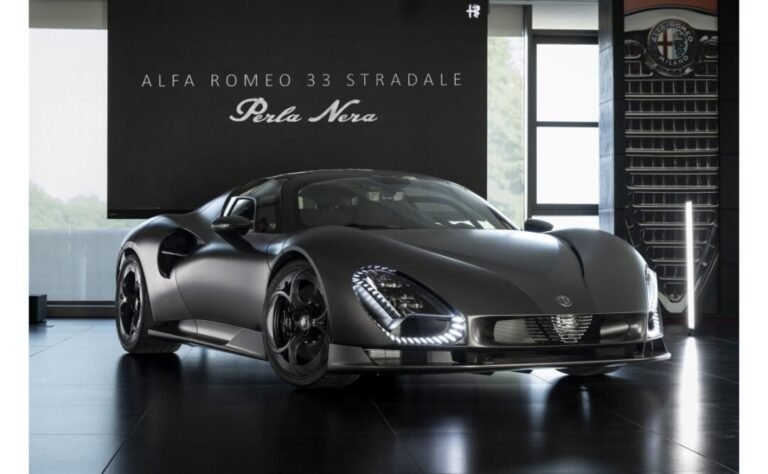
The real change was under the skin. Alfa Romeo took the 2.0 litre V8 from the Tipo 33 racing programme, the same bloodline behind the story of the 33 Stradale, and enlarged it to 2,593 cc for the road. It kept the light alloy block and dry sump, gained SPICA mechanical injection and drove the rear wheels through a five-speed ZF gearbox and a limited-slip differential. The chassis stayed close to the Giulia GTV, which kept costs down but left a racing-derived V8 sitting ahead of a live rear axle.
The Montreal reached the public at the Geneva Motor Show in March 1970. Bertone built and painted the bodies, while Alfa Romeo’s Arese plant fitted the mechanical parts and interior.
Alfa Romeo Montreal specs
| Item | Figure |
|---|---|
| Production | 1970 to 1977, 3,925 cars |
| Engine | 90 degree V8, light alloy block and heads, dry sump |
| Displacement | 2,593 cc (80.0 x 64.5 mm) |
| Fuel system | SPICA indirect mechanical injection |
| Power | 200 hp at 6,500 rpm |
| Torque | 243 Nm at 5,100 rpm |
| Gearbox | ZF five-speed manual, limited-slip differential |
| Brakes | Ventilated discs all round |
| Suspension | Double wishbones at the front, live axle at the rear |
| Length, width, height | 4,220 mm, 1,672 mm, 1,205 mm |
| Wheelbase | 2,350 mm |
| Kerb weight | 1,270 kg |
| Top speed | 220 km/h |
| 0 to 100 km/h | 7.6 seconds |
Production counts vary between sources, from 3,913 to 3,925 cars. We use the figure from the Alfa Romeo Museum as the official one.
Why didn’t the Alfa Romeo Montreal sell?
Timing, mostly. The Montreal was priced above a Jaguar E-Type or a Porsche 911, and it arrived just before the 1973 oil crisis made a 200 hp V8 coupe a hard sell. Unsold cars lingered, and the model finally left the price lists in 1977.
The other problem is almost comic. Alfa Romeo never submitted the car for US or Canadian emissions testing, so the Montreal was never officially sold in North America. The car named after a Canadian city could not be bought new in Canada.
Its failure in the showroom says little about the car itself. Autodelta prepared a Group 4 racing version in 1972 that competed in Germany’s DRM series, and the shape remains one of the most striking of the decade. Alfa’s design history is usually told through Pininfarina, but the Montreal shows what Bertone could do, and it deserves a place alongside the most debated Alfas ever made.
What is an Alfa Romeo Montreal worth today?
According to The Classic Valuer, the median price is £51,000 for a car in average condition, well above the £23,010 it gives as the median for all Alfa Romeos. The highest recorded sale is £134,788, at Gooding and Company in August 2023. Of 151 Montreals offered at auction, 114 sold, a rate of about 75 percent.
The spread is wide. The lowest result since 2020 is £5,346, on Bring a Trailer in November 2025, which tells you how much condition and history drive the price.
What should you check before buying a Montreal?
Classic Trader’s buying guide lists the main trouble spots:
- Rust: sound insulation on the body and floor can trap moisture. Look carefully below the C-pillar vents, and remember that replacement panels are very hard to find.
- SPICA injection: it needs regular maintenance, and specialist rebuilds are expensive. Ask for service records.
- Water pump idler bearing: failure can damage the front seals. Check the oil reservoir for water in the oil and listen for excessive cam chain play.
- Gearbox: the ZF unit is strong, but the reverse idler shaft can wear early and small leaks are common.
- Interior: trim pieces are scarce, although seats can be re-covered.
Our advice is simple: buy the best-documented car you can afford. A cheap Montreal with a tired injection system rarely stays cheap for long.
Will Alfa Romeo bring the Montreal back?
Nothing official says so. ClubAlfa reported in August that the name could return on the next BottegaFuoriserie project, which Alfa Romeo has confirmed exists but has not named. Treat that as a rumour until Arese says otherwise. Alfa Romeo has not used the Montreal name on a production car since 1977, and enthusiasts following the Nettuno V6 debate would certainly welcome a new one.
Frequently asked questions
How many Alfa Romeo Montreals were made?
The Alfa Romeo Museum gives a total of 3,925 cars between 1970 and 1977. Other sources quote slightly lower figures, down to 3,913.
What engine does the Alfa Romeo Montreal have?
A 2,593 cc 90 degree V8 derived from the Tipo 33 racing engine, with dry-sump lubrication and SPICA mechanical injection. It produces 200 hp at 6,500 rpm and 243 Nm at 5,100 rpm.
Who designed the Alfa Romeo Montreal?
Marcello Gandini, working at Bertone, designed both the Expo 67 prototypes and the production car.
Was the Alfa Romeo Montreal sold in the USA or Canada?
No. Alfa Romeo did not submit it for North American emissions testing, so it was never officially sold there despite its name.
The Montreal was too expensive, badly timed and absent from the continent that inspired its name. Half a century later those same facts help explain why it is so desirable: a racing V8 in a Gandini suit, built in small numbers and never replaced.
Whether your garage holds a Montreal or just the dream of one, our Alfa Romeo wall art and Alfa Romeo t-shirts keep the Biscione close.
More to read