Alfa Romeo Alfetta: History of a Legend and Its Reported Return
From Farina's 1950 title to the transaxle saloon and the GTV6: the Alfetta story so far, and what reports say about a new one for 2030.
Table of Contents
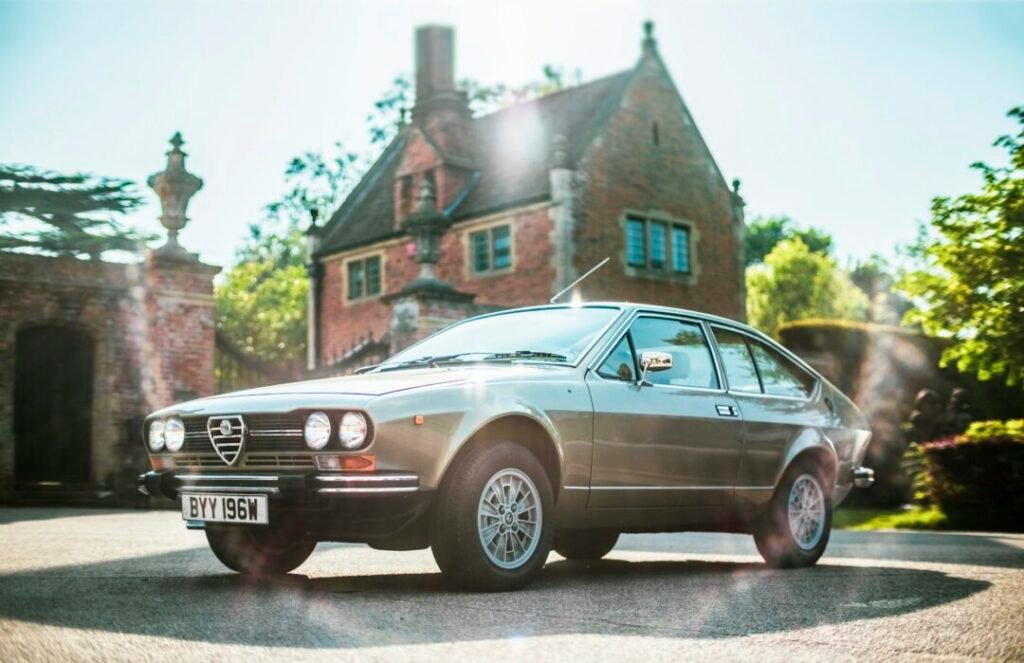
The Alfa Romeo Alfetta is one of the brand’s most important names. It began as the nickname of the Tipo 158 and 159 racing cars that won the first two Formula 1 world titles in 1950 and 1951, then became a transaxle saloon launched in May 1972 and a Giugiaro coupe in 1974. French reports now say the name will return on a compact Alfa built from 2030.
- Racing Alfetta: Tipo 158 programme started in 1938; world champions with Giuseppe Farina in 1950 and Juan Manuel Fangio in 1951
- Alfetta saloon: presented in May 1972, 1,779 cc twin-cam, 122 hp, built until 1984 with more than 475,000 made
- Alfetta GT and GTV: Giugiaro coupe from 1974, 136,275 built until 1986, including the V6 GTV6
- New Alfetta: reported, not confirmed. A C-segment Alfa on the STLA One platform, built in Tychy, Poland, from 2030
Why is it called the Alfetta?
Alfetta is simply Italian for “little Alfa”, and it was first used for a racing car rather than a road car: the Tipo 158, a single-seater whose development began in 1938. The affectionate nickname stuck, and it followed the car into a new era of Grand Prix racing.
After the war the little car became a giant. According to the Alfa Romeo Museum, Giuseppe “Nino” Farina won the first Formula 1 World Championship in 1950 with Fangio and Luigi Fagioli second and third. For 1951 the car was updated as the Tipo 159, and Fangio took the first of his five titles at the final round in Spain. Alfa Romeo then withdrew: the 159 had reached its limit, and a new car was too expensive alongside road car production. Alfa’s racing symbols have their own story too, told in the history of the Quadrifoglio badge.
What made the 1972 Alfetta saloon special?
Its layout. Alfa Romeo’s official heritage archive explains that the engineers borrowed the racing car’s thinking: the engine stayed at the front, but the clutch and gearbox moved to the rear axle in a transaxle arrangement. The result was a 50/50 weight distribution, something few family saloons of the time could claim.
At the back sat a De Dion tube with a Watt’s linkage, the same kind of rear suspension Fangio’s 159 had used, which is why Alfa revived the Alfetta name. The rear disc brakes were mounted inboard, next to the differential, to cut unsprung weight. Under the bonnet was the familiar 1,779 cc twin-cam four with two twin-choke Weber carburettors, good for 122 hp at 5,500 rpm and 180 km/h in a car weighing 1,060 kg.
The launch itself was unusual. The car was ready for the 1971 Turin show but was held back so it would not steal attention from the new Alfasud. It was finally presented to the press at Grignano, near Trieste, on 17 May 1972. Over twelve years the range grew to 1.6 and 2.0 litre petrol engines, a 2.0 Turbo D diesel in 1979 and a Quadrifoglio Oro in 1983 with electronic injection and variable cam timing. More than 475,000 were built before the Bertone-styled Alfa 90 took over in 1984.
Alfetta GT, GTV and GTV6: the coupes
In 1974 the transaxle chassis gained a fastback body by Giorgetto Giugiaro, who had just set up Italdesign. The Alfetta GT launched with the 1.8 litre engine, a cheaper 1.6 arrived in 1976, and the 2.0 litre cars took the GTV name. The GTV 2.0 Turbodelta is described by Alfa Romeo as the first mass-produced Italian car with a turbocharged engine.
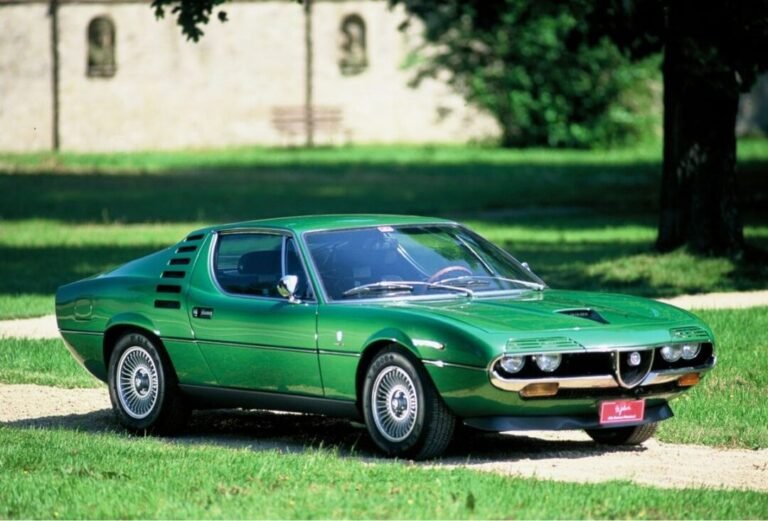
The best known version is the GTV6, with the 2.5 litre V6 from the Alfa 6 saloon, developed with Autodelta. In US trim Hagerty lists it at 154 hp with Bosch fuel injection. That V6 became one of the most loved Alfa engines, which is why the debate over Alfa’s next V6 matters so much to owners. In the 1970s Alfa also sold the V8 Montreal, but the Alfetta coupes were the cars enthusiasts could realistically buy. Production of all GT versions ended in 1986 after 136,275 cars.
| Model | Years | Key facts |
|---|---|---|
| Tipo 158 “Alfetta” | 1938 to 1950 | Grand Prix car, 1950 world champion with Farina |
| Tipo 159 “Alfetta” | 1951 | Evolution of the 158, 1951 world champion with Fangio |
| Alfetta saloon | 1972 to 1984 | Transaxle, De Dion rear, 1.8 litre with 122 hp at launch, more than 475,000 built |
| Alfetta 2.0 Turbo D | from 1979 | 82 hp turbo diesel built with VM Motori |
| Alfetta GT, GTV | 1974 to 1986 | Giugiaro coupe, 1.6, 1.8 and 2.0 litre, Turbodelta |
| GTV6 | until 1986 | 2.5 litre V6 from the Alfa 6, 154 hp in US trim |
Is a new Alfa Romeo Alfetta coming?
Possibly, but nothing is official yet. On 11 November 2026 ItalPassion, citing France’s Journal de l’Automobile, reported that the compact Alfa known internally as project A2H will be called Alfetta rather than Giulietta. According to that report, production would start in 2030 at Stellantis’ plant in Tychy, Poland, on the STLA One platform, taking the production slot of the Junior, which would not get a second generation.
ClubAlfa reported the same direction two days earlier, quoting the French outlet Journal Auto, and added that Stellantis has not confirmed either the end of the Alfa Romeo Junior or the Alfetta name. What is on record is softer. Stellantis Europe chief Emanuele Cappellano said in May 2026 that Alfa Romeo is among the brands that will follow Peugeot onto STLA One, and former CEO Jean-Philippe Imparato said back in 2023 that he wanted “an Alfetta” in the C-segment.
Treat every detail below as unconfirmed until Alfa Romeo announces it:
- Name: Alfetta, replacing the expected Giulietta name (reported)
- Segment: C-segment compact, possibly with a raised, crossover-like stance (reported)
- Plant and platform: Tychy, Poland, on STLA One (reported)
- Timing: production from 2030, a reveal possibly in 2029 (reported)
- Engines: not reported at all
Does a crossover deserve the Alfetta name?
This is where Alfisti will argue. The original Alfetta name meant one thing: racing engineering put into a car you could buy. The 1972 saloon earned it with a rear-mounted gearbox and a De Dion axle, not with a badge. A compact sharing its platform with other Stellantis brands would have to earn it differently, through the way it drives and the way it looks.
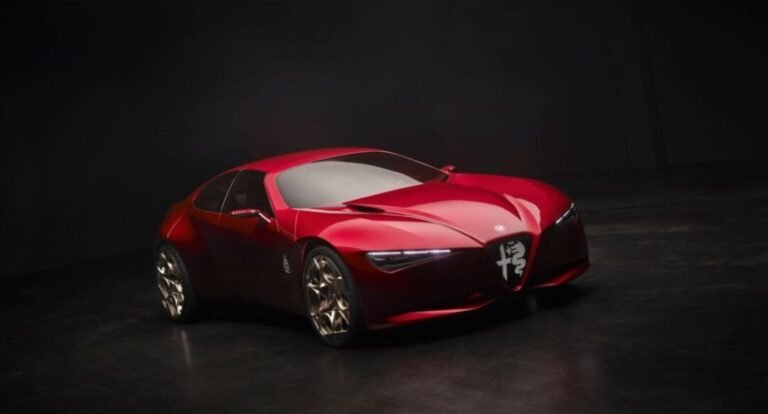
There is reason for cautious hope on the looks. The Cuorerosso concept shown in Paris was presented as a design manifesto for future models, and a compact car wearing that face would at least look the part. Our view: the name is worth reviving only if the car offers something the Junior does not, such as a proper driver focused version. Otherwise Giulietta would be the more honest choice.
Frequently asked questions
What does Alfetta mean?
Alfetta means “little Alfa” in Italian. It was the nickname of the Tipo 158 and 159 Grand Prix cars before Alfa Romeo used it officially for the 1972 saloon.
How many Alfa Romeo Alfettas were made?
More than 475,000 saloons were built between 1972 and 1984, according to Alfa Romeo’s heritage archive. A further 136,275 GT, GTV and GTV6 coupes were made between 1974 and 1986.
Why is the Alfetta gearbox at the back?
The transaxle layout puts the clutch and gearbox on the rear axle to balance the car’s weight evenly front to rear. Combined with the De Dion rear suspension and inboard rear brakes, it gave the Alfetta unusually sharp handling for a saloon.
When will the new Alfa Romeo Alfetta be released?
Reports from French media point to production starting in 2030 in Poland, with a possible reveal in 2029. Alfa Romeo has not confirmed the name, the date or the plant.
The Alfetta name carries two world titles, a clever saloon and one of Giugiaro’s best coupes. If Alfa Romeo does bring it back, the new car will be judged against all three, and that is exactly how it should be.
Whether you dream of a GTV6 or wait for the next Alfetta, our Alfa Romeo t-shirts and Alfa Romeo hoodies keep the Biscione close.
More to read